IAMHRF convenes leaders in Cape Town to strengthen youth mental health
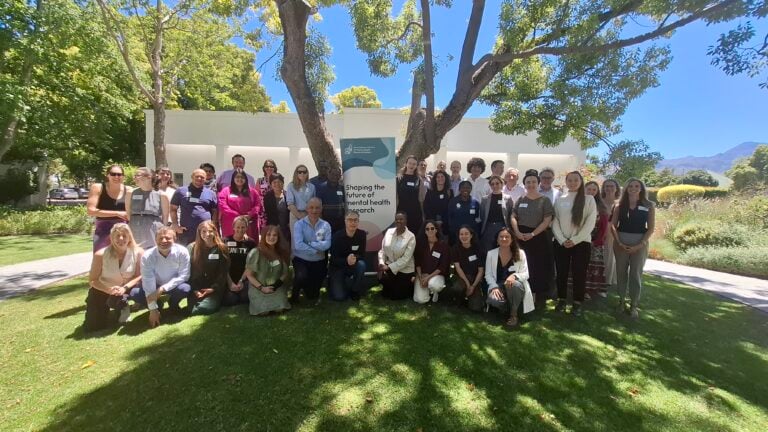
From 12–14 November 2025, IAMHRF brought together around 40 delegates in Cape Town, South Africa, for an in-person meeting focused…
Read article
The impact of cuts to care and research have been a source of concern and ongoing worry in the mental health sector this year. And yet, concerted efforts to map the challenge in services and research, raise the prominence of mental health in global policy, and significant new investments in mental health research means that we end the year more optimistic than we began.
The interactions we’ve had with members and others in the sector reinforce that we are a community that recognises the scale of the challenge we face but also one that chooses to come together: to keep mental health on the agenda, to find new and creative ways to fund and finance research and implementation, and to create the impact that is needed. There is also a shared commitment to honour a duty to the next generation by prioritising young people’s mental health.
The new investments being made in the sector reflect this imperative for young people and come in the wake of last year’s Lancet Psychiatry Commission on Youth Mental Health, this year’s Second Lancet Commission on Adolescent Health and Wellbeing and UNICEF’s Perception of Youth Mental Health Report. Over the course of this year, we’ve been pleased to welcome significant funding directed towards this crisis.
In public funding, the European Commission launched a new Horizon Europe call (€15 million, equivalent to more than $17 million USD) focused on improving mental health outcomes for people in education, training, and work. As part of its Cluster 2 (Culture, Creativity and Inclusive Society), the call responded to growing concerns about youth mental health in Europe. Despite a landscape rich in pilot initiatives, few interventions have been rigorously tested and scaled. This call aims to address that gap and deliver cost-effective, replicable solutions for real-world use.
This strategic intent is already being mirrored by national funders. Australia’s National Health and Medical Research Council (NHMRC) – which is investing $1.5 million AUD to support Australian-European collaborations under the Horizon Europe programme, with a priority on youth mental health – is a great example of how pro-active steps from funders can support research networks to drive innovation across borders.
ARPA-H launched a new initiative Evidence-Based Validation & Innovation for Rapid Therapeutics in Behavioral Health (EVIDENT). The agency is allocating up to $100 million to develop more quantitative, objective measures of mental and behavioral health outcomes. The goal is to move beyond subjective assessments and patchwork clinical data so that progress — and what works for whom — can be evaluated precisely and consistently.
The UK government is investing £50 million over five years to strengthen mental health research by building national infrastructure, including a 20,000-person research cohort, improved access to health data, and support for clinical trials and industry collaboration. The goal is to accelerate scientific breakthroughs, develop more effective and personalised treatments, and ensure research is shaped by lived experience, while also positioning the UK as a global leader in mental health science.
In the philanthropic sphere, the Huo Family Foundation announced a £10 million funding initiative to research the effects of digital technology on brain development, social behaviours, and mental health in children and young people. In the US, Young Futures (YF) unveiled ‘YF500’: a five-year, $50m philanthropic index fund that aims to back 500 community-rooted nonprofit leaders working at the intersection of youth, technology and mental health. Pivotal Ventures committed $20 million to youth-led, systems-focused approaches, inspired by storytelling and data from the TRACK project and the Jed Foundation received a $40M unrestricted gift from MacKenzie Scott towards its work to protect emotional health and prevent suicide for teens and young adults. Wellcome Leap has partnered with Pivotal (the organisation founded by Melinda French Gates) to commit $100 million to women’s health research aimed at generating breakthroughs in areas with high disease burden and chronic underfunding—including cardiovascular health, autoimmune conditions, and mental health. ICONIQ Impact launched the Youth Mental Wellbeing Co-Lab, a collaborative philanthropy fund aiming to mobilize $200 million to support 25 organisations around the world working to reduce youth anxiety and depression, beginning with $112 million in donations from eight philanthropic donors and providing unrestricted funding over five years. The Being Initiative launched significant competitive funding opportunities to support both nascent and scaling youth mental health innovations across a network of low- and middle-income countries
Child and adolescent mental health was also one of the central priorities for advocacy ahead of the seminal discussions at this year’s United Nations General Assembly. Alongside sector work to raise consideration of service reform and suicide prevention, our Alliance contributed thinking on data and research to an advocacy briefing led by the Global Mental Health Action Network (GMHAN). The briefing highlighted the need to strengthen routine health information systems and integration of mental health data, as well as the need to improve research capacity through funding and collaboration on national priorities for mental health research.
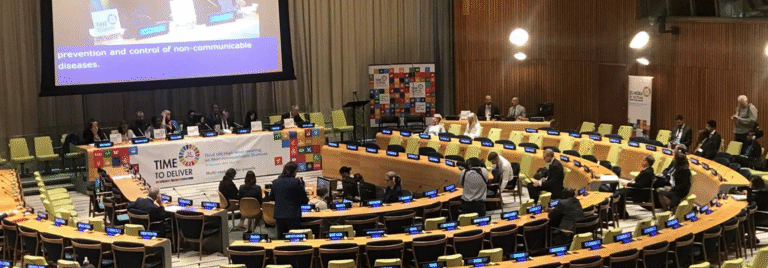
Sector advocacy culminated in a historic milestone at the United Nations, as world leaders adopted a first-ever integrated political declaration on noncommunicable diseases (NCDs) and mental health, committing governments to a set of measurable global targets by 2030 - including expanding access to mental health care for 150 million more people around the world, alongside reductions in tobacco use and improved control of hypertension. This declaration not only elevates mental health to the centre of global health and sustainable development efforts but also embeds accountability frameworks, whole-of-government approaches, and stronger financing language, engaging civil society, youth, and people with lived experience as essential partners in implementation – a major win for ongoing advocacy and the sector’s push to solidify mental health within international health policy.
We’d like to congratulate our partners at GMHAN and our many members for their tireless convening and campaigning.
We made the decision to focus this year’s IAMHRF in person convening on young people’s mental health in response to the scale of the challenge – and the scale of the opportunity. As the investments, literature and policy activity show: there is appetite to act. Acting together is what will shift the dial, and this must start with understanding each other.
So, in November we hosted a meeting in Cape Town (South Africa) bringing together funders, policy makers, implementers, advocacy organisations, researchers, experts by experience and young people to explore each other’s perspectives and dig deeper on some of the challenges that we know are blocking progress.
We looked at what measures matter to young people, and how measures need to travel through the various decision points that move a study from inception to implementation. We also looked at what democratising research and shifting power to young people really means, and how funders and funding models can support this. A unifying theme was that research has impact when it is grounded in communities and the needs of young people – that is, when implementation is embedded from the start.
This resonates with everything we heard across our symposium series on research and implementation, and in discussions at the 7th Global Mental Health Summit held in Cape Town just before our meeting. It was powerful to reflect on the shift that is needed with young people and to hear the impact it will make if we can build on efforts to think, act and fund in this way.
As you might expect, there’s a lot to unpack – so we’ll be sharing more detail in the new year about how we are following up on the exciting ideas and opportunities we identified together. In the meantime, do take a look at reflections from our members and delegates on their experiences.
It’s been a big year full of uncertainty but also hope and action. We end this year proud of our sector, inspired by our members and ready for the challenge ahead. So, last but not least, a shout out to our members and their many successes this year, which you can learn more about here.
From 12–14 November 2025, IAMHRF brought together around 40 delegates in Cape Town, South Africa, for an in-person meeting focused…
Read articleToo often, research produces interventions that are difficult to scale. This is frustrating for researchers, funders, and critically, those poised to…
Read articleThe 2025 United Nations (UN) General Assembly High-Level Meeting on Noncommunicable Diseases (NCDs) and Mental Health marked a historic moment…
Read articleOur new website features an innovative hub: a curated, daily updated portal for mental health research funding opportunities. This global resource —…
Read articleThe International Alliance of Mental Health Research Funders (IAMHRF) brought vital energy and insight to the International BNA 2025 Festival…
Read articleA new expert commentary on the future of psychedelics as a treatment for mental health conditions has just been published…
Read articleOver the last week, we’ve been looking back at 2024 by celebrating the success stories of IAMHRF members. These fit…
Read article